Gaston Andrey Ferrari Sebring 12 Hour History
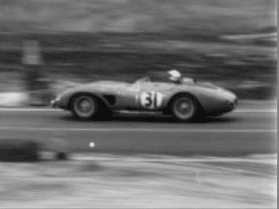
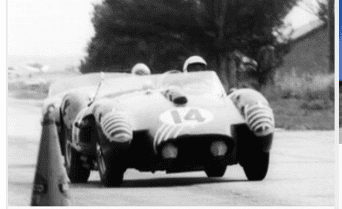
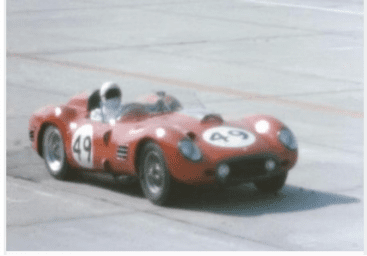
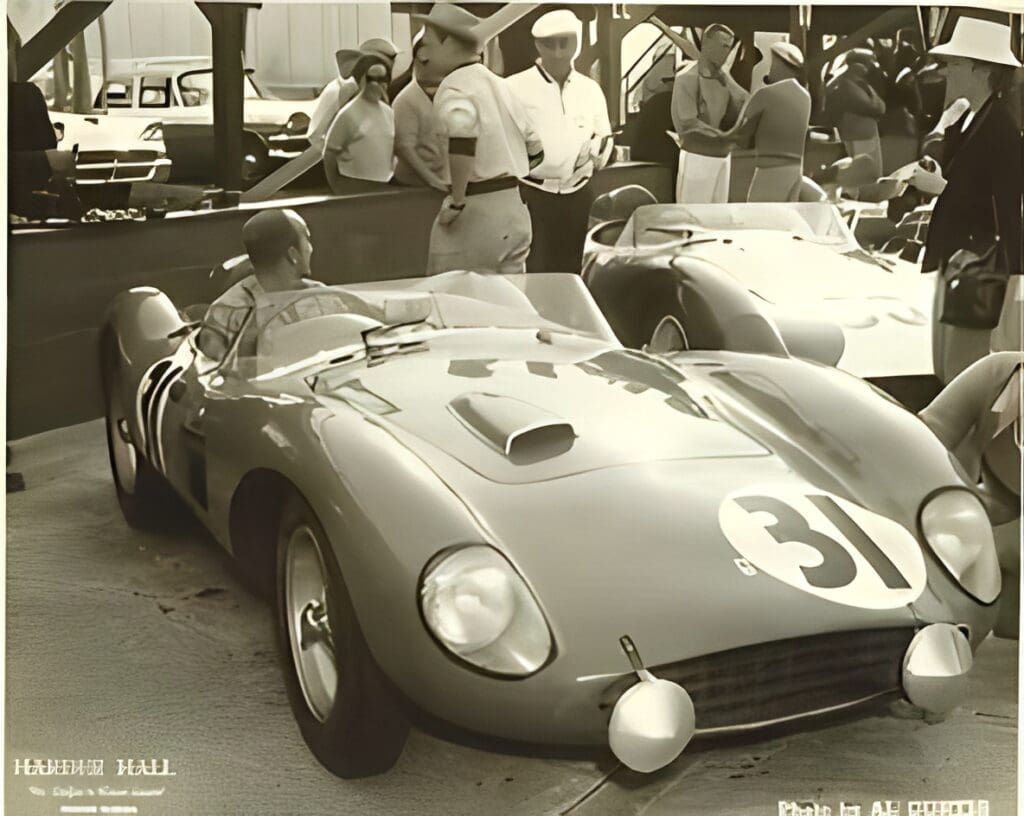
Gaston Andrey drove several Ferraris in the Sebring 12 Hour. 1958 driving the Ferrari 500 TRC #0706 with Bill Llyod, 1959 Ferrari 250 Testarossa #0720 with Augie Pabst & Ed Lunken and in 1961 Ferrari 250 Testarossa with George Constantine.
Gaston Andrey’s Ferrari appearances at the 12 Hours of Sebring from 1958 through 1962 trace a compelling arc through one of Ferrari’s most important eras in sports car racing. During this period, Ferrari’s competition machines evolved rapidly, and the now-iconic “Testa Rossa” name—literally “red head,” derived from the red-painted cam covers—became synonymous with the marque’s racing identity.
In 1958, Andrey took the wheel of a Ferrari 500 TRC (chassis 0706MDTR), a car that reflected an earlier chapter in Ferrari engineering. Unlike the later V12-powered machines, the 500 TRC was driven by a four-cylinder engine, prized for its balance and reliability. He shared driving duties with Bill Lloyd, with a brief stint by a young Dan Gurney. The car performed strongly in the opening stages, but Sebring’s notoriously punishing surface took its toll. On lap 125, a rear axle bearing failure forced the team into retirement—an all-too-common fate at a circuit known as much for endurance as outright speed.
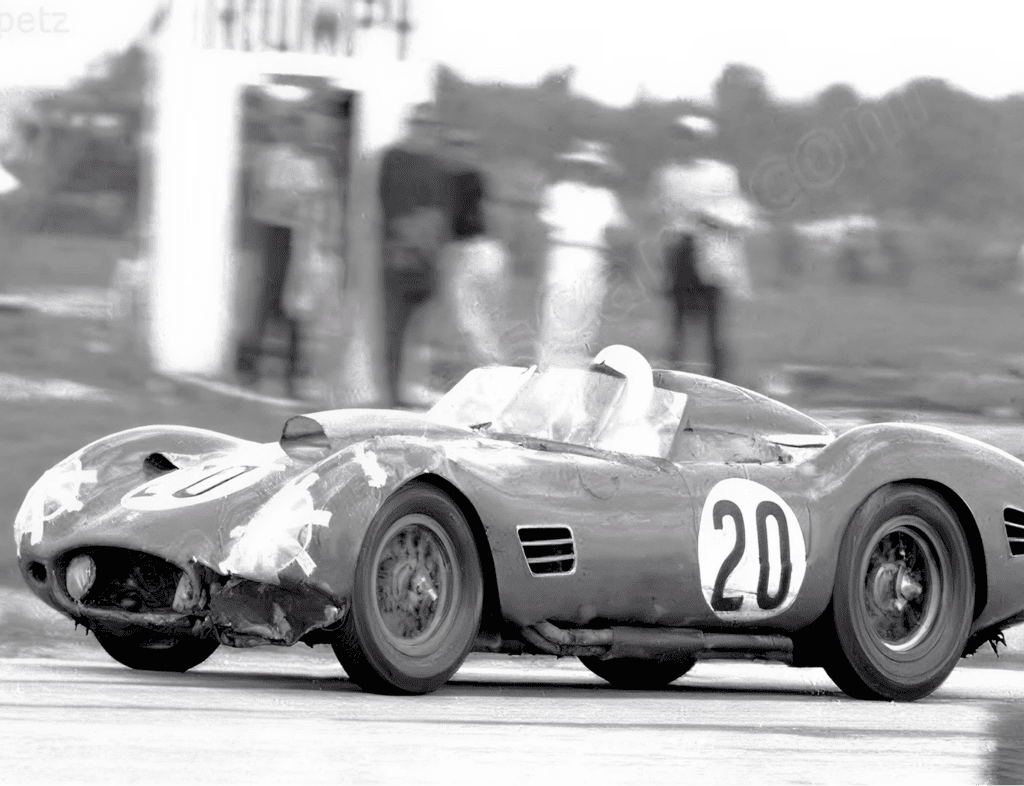
By 1959, Ferrari had firmly entered its V12-dominated era, and Andrey returned to Sebring in a Ferrari 250 Testa Rossa (chassis 0720TR) alongside Augie Pabst and Ed Lunken. Against a field that included factory-backed entries, the trio delivered a commendable performance, finishing 7th overall and 4th in the 3.0-liter class. It was a result that underscored both the capability of the Testa Rossa and the competitiveness of well-prepared privateer teams.
In 1961, Gaston Andrey returned to the 12 Hours of Sebring, once again driving under the banner of Luigi Chinetti’s North American Racing Team (N.A.R.T.). For this entry, Chinetti fielded a highly specialized and competition-prepared Ferrari 250 GT SWB California Spyder, a car far removed from its road-going origins.
Finished in white with red accents, the alloy-bodied, left-hand-drive Spyder featured a host of purposeful racing modifications. Among them were covered headlights, an external fuel filler, velocity stacks, and an oversized fuel tank, all tailored for endurance competition. Notably, the car was equipped without servo assistance, emphasizing weight savings and driver feel.
At its heart was a specially prepared Tipo 168B engine, closely related to Ferrari’s Testa Rossa competition units, and fitted with 10mm high-lift camshafts. This configuration delivered a significant boost in performance, effectively transforming the California Spyder into a formidable racing machine.
Driven with determination, Andrey and his co-driver extracted the most from the car and its advanced specification. In the face of Sebring’s relentless demands, the Ferrari performed admirably, finishing 12th overall and 2nd in the 3.0-liter class—an impressive result that underscored both the ingenuity of Chinetti’s preparation and the enduring capability of Ferrari’s V12 platform.
Andrey’s notable Sebring appearance came in 1962, when he co-drove another Ferrari 250 Testa Rossa with George Constantine. Once again, Sebring’s harsh demands proved decisive. After just 40 laps, a rear differential failure ended their race prematurely.
Though not marked by outright victories, Andrey’s Sebring campaigns reflect the reality of endurance racing in its golden age—where mechanical resilience was as critical as driver skill. His career at Sebring mirrors Ferrari’s own progression, from the nimble four-cylinder TRC to the legendary V12 Testa Rossa, cars that would go on to define an era of international sports car racing.