N.A.R.T Ferrari 250 SWB Cal Spyder #2015GT
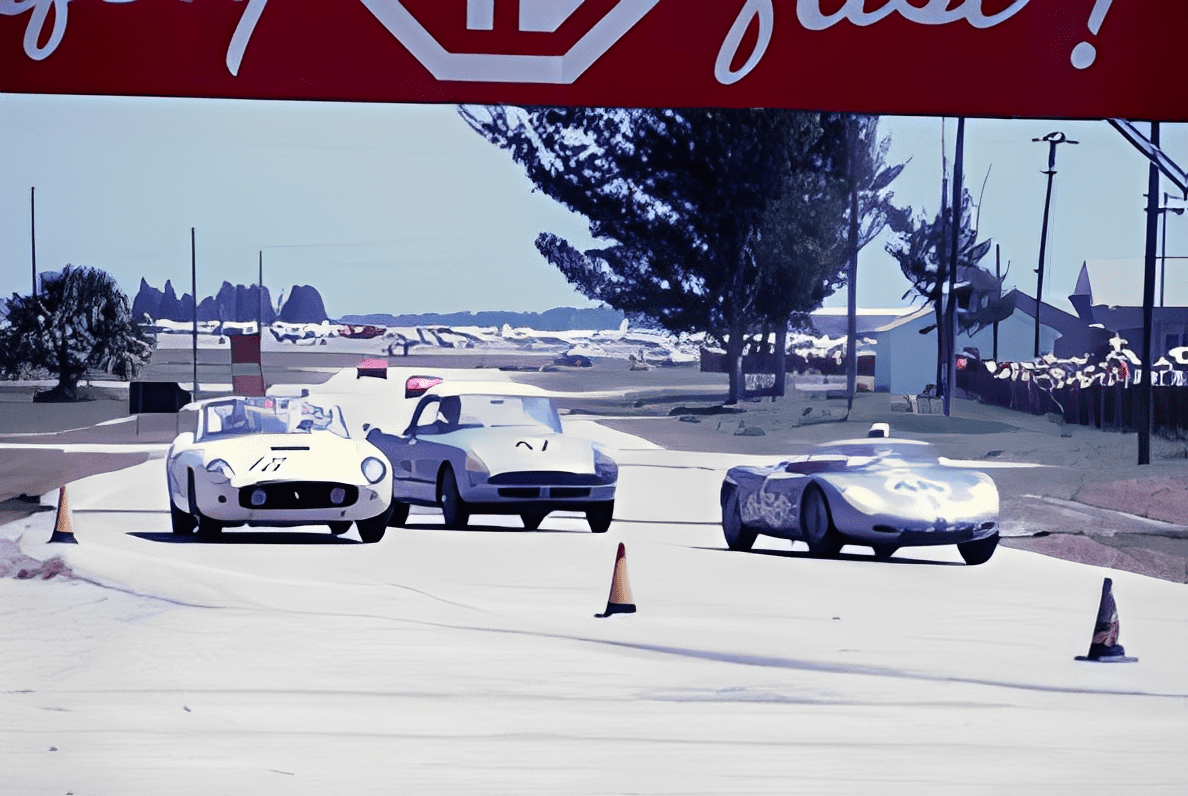
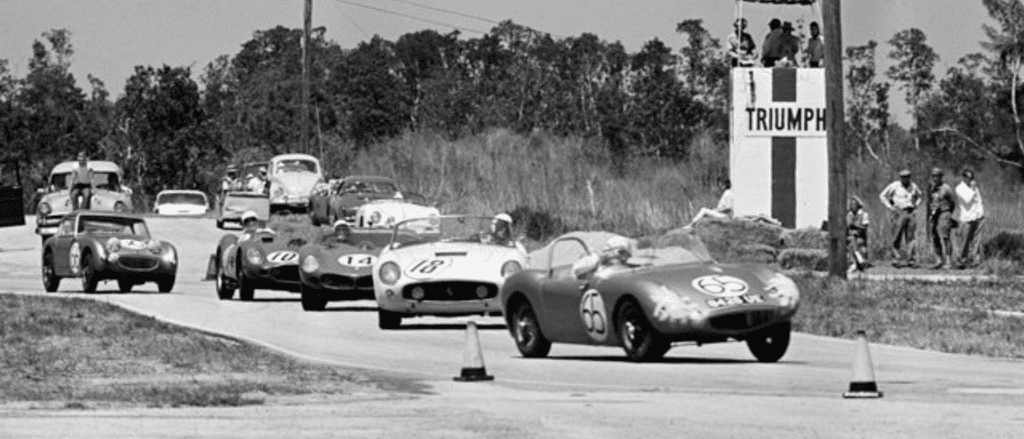
This Ferrari 250 SWB was special built for competition. Shown above racing in the 61 Sebring 12 Hr. Gaston Andrey with his teammates finished 12 overall, 2nd in GT3
2015GT 60/jun/20 *** 6th *** Ferrari 250 GT SWB California Spyder, alloy, LHD White/red,Covered headlights, outside filler cap, velocity stacks, oversize gas tank no servo, Special engine 168B (testa rossa type engine 168B) 10mm camshafts elevation, Chassis Tipo 539 ,Engine Tipo 168B, Numero interno 554F ,Gearbox Tipo 539 Camshafts 130, Camshaft lift 10mm , Compression ratio 9.5:1, Carbs 40DCL6,285hp
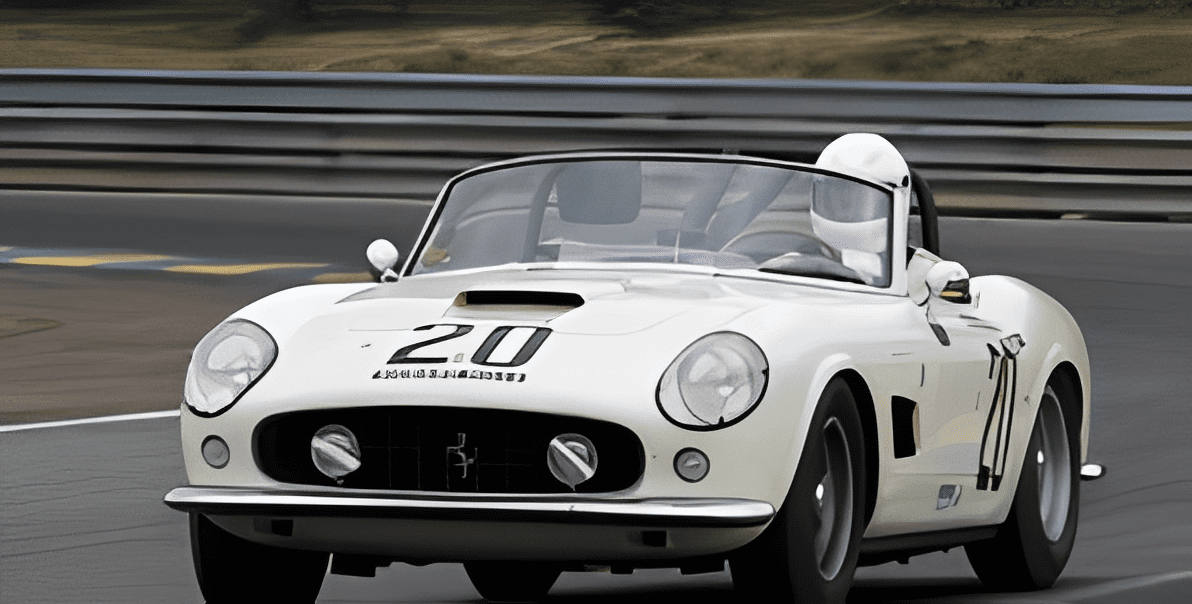
One of just three alloy-bodied short wheelbase Spyder California’s built by Ferrari, this car (serial number 2015 GT) raced at LeMans in 1960, and it finished twelfth overall at Sebring in 1961.
It was built with a special competition engine and has an outside fuel filler cap in the trunk lid – a special feature of competition Spyder Californias. It has been restored to its 1960 Le Mans livery.
The 250 SWB California Spider 2015GT was already a rare and desirable road car, one of 6 built —but what made the 1961 Sebring entry under Luigi Chinetti’s N.A.R.T. team truly special is how unusual (and bold) it was in context.
First, the car itself:
- The California Spider SWB (Short Wheelbase) was primarily a dual-purpose GT—luxury road car with competition capability.
- It shared serious racing DNA with the 250 GT SWB Berlinetta, including the Colombo V12 and similar chassis geometry.
- But it was still an open-top car, not the typical choice for endurance racing at the highest level.
Now, what made Sebring 1961 stand out:
Entered by N.A.R.T. (North American Racing Team)
Luigi Chinetti wasn’t just a Ferrari importer—he was Ferrari’s key figure in the U.S. and a Le Mans winner himself.
- N.A.R.T. entries often blurred the line between customer cars and factory-backed efforts.
- Running a California Spider showed Chinetti’s philosophy: prove Ferrari road cars could compete seriously.
.
Against purpose-built race cars
At Sebring, the competition included:
- Ferrari Testa Rossas
- Maserati race cars
- Corvette factory efforts
Entering a convertible GT against these was unconventional—and borderline audacious.
Gaston Andrey’s drive of the 1961 Ferrari 250 SWB California Spider 2015GT for N.A.R.T at Sebring stands out because it wasn’t just about speed—it was about control, mechanical sympathy, and race intelligence.
Here’s how he was able to guide the car successfully through one of the toughest endurance races of the era:
Managing an open-top GT in brutal conditions
Sebring was (and still is) notoriously rough—bumpy concrete, heat, and constant vibration.
- The California Spider wasn’t a purpose-built prototype, so it required a delicate balance between pushing and preserving
- Andrey kept the car composed over the uneven surface, avoiding unnecessary stress on the chassis and suspension
Preserving the Colombo V12
The 3.0L V12 was powerful but needed respect over 12 hours.
- Smooth throttle inputs and disciplined rev management helped prevent mechanical fatigue
- He prioritized consistency over outright aggression, which is critical in endurance racing
Tire and brake conservation
Sebring punished brakes and tires more than most tracks at the time
- Andrey drove with mechanical awareness—minimizing lockups and avoiding overdriving corners
- This reduced pit stops and kept the car competitive over long stints
Adapting to changing race conditions
Endurance racing isn’t static—track grip, traffic, and temperatures evolve
- He maintained focus through traffic and shifting conditions
- His ability to read the race helped avoid incidents and maintain momentum
Extracting performance from a “dual-purpose” car
Unlike the Testa Rossas and other dedicated race cars, the California Spider had compromises
- Andrey maximized what the car could do rather than fighting what it couldn’t
- This is often what separates a finisher from a retirement at Sebring
The bigger picture:
Gaston Andrey’s performance wasn’t about dominating the field—it was about proving that a Ferrari road-derived GT, in the right hands, could endure one of the world’s hardest races.
He didn’t just drive the car fast.
He brought it home—and at Sebring, that’s what mattered most.